How I Found Calm Through Qigong — A Beginner’s Journey to Mental Balance
Have you ever felt overwhelmed by stress, yet unsure where to start for real relief? I was stuck in that loop too—until I tried qigong. As a beginner, I didn’t expect much, but the psychological shifts were undeniable. This ancient practice didn’t just slow my breath; it quieted my mind. No magic, no hype—just simple, repeatable movements and awareness techniques that made a noticeable difference. Here’s how qigong helped me regain emotional stability and mental clarity, one gentle motion at a time.
The Breaking Point: When Stress Took Over
Life had become a constant hum of tension. Even on days with no major deadlines or crises, I felt on edge—my thoughts racing, my body tight, my sleep shallow. As a woman in her mid-40s balancing work, family responsibilities, and aging parents, the weight of daily demands had quietly accumulated into chronic stress. I wasn’t clinically diagnosed with anxiety, but I lived with its symptoms: irritability, difficulty concentrating, and a sense of being emotionally reactive. A spilled cup of coffee could send me into a spiral. A child’s tantrum felt like a personal failure. I knew I needed to change something, but medication felt too extreme, and therapy was not yet within reach.
What I craved was a way to reset—not just physically, but mentally. I wanted to feel present in my own life again. My search led me through various wellness trends: meditation apps, yoga classes, breathing exercises. Some helped briefly, but nothing created lasting calm. Then, a friend mentioned qigong. She described it as “quiet movement” that helped her manage grief and stay grounded. Skeptical but curious, I watched a short instructional video online. The movements were slow, almost imperceptible. There was no intense stretching or complicated choreography. Just standing, breathing, and moving the arms in gentle arcs. It looked too simple to work. But I was out of options—so I decided to try it for seven days.
What Is Qigong? More Than Just Movement
Qigong (pronounced “chee-gong”) is a centuries-old practice rooted in traditional Chinese medicine. At its core, it is the coordination of breath, gentle physical movement, and mindful awareness to cultivate and balance *qi*—a term often translated as “vital energy” or “life force.” Unlike high-intensity workouts or even some forms of yoga, qigong is not about exertion. It is about alignment, rhythm, and internal focus. The word itself combines *qi* (energy) and *gong* (skill or practice), suggesting that it is a learned discipline, not an innate ability.
Practitioners believe that when *qi* flows freely through the body’s energy pathways, known as meridians, physical and emotional health are supported. Blockages or imbalances in this flow are thought to contribute to fatigue, mood disturbances, and physical discomfort. While Western science does not measure *qi* directly, research has increasingly validated the physiological benefits of qigong, particularly in regulating the nervous system and reducing stress markers. The practice is not religious, mystical, or esoteric. It does not require belief in any particular philosophy. Instead, it invites attention to the body’s natural rhythms and the connection between breath and emotion.
There are thousands of qigong forms, ranging from dynamic sequences to still meditative postures. Some are designed for martial arts training, others for healing or spiritual cultivation. The type I began with—medical or healing qigong—is specifically tailored to support mental and physical well-being. It emphasizes slow, repetitive motions, deep abdominal breathing, and a quiet mind. What surprised me most in those early days was how little physical effort was required—and yet how deeply it affected my mental state. This was not exercise in the conventional sense. It was, instead, a practice of returning to myself.
Why Qigong Works for Psychological Adjustment
The psychological benefits of qigong are not merely anecdotal. A growing body of scientific research supports its role in reducing anxiety, improving mood, and enhancing emotional regulation. One key reason lies in its impact on the autonomic nervous system. When we experience stress, the sympathetic nervous system activates—the so-called “fight-or-flight” response. Heart rate increases, muscles tense, and mental chatter accelerates. Qigong, through its emphasis on slow, rhythmic breathing and gentle movement, activates the parasympathetic nervous system, which governs “rest-and-digest” functions. This shift helps the body and mind transition from a state of alertness to one of calm.
Studies have shown that regular qigong practice is associated with lower levels of cortisol, the primary stress hormone. In a 2018 meta-analysis published in the journal *Frontiers in Psychology*, researchers reviewed 17 clinical trials and found consistent evidence that qigong significantly reduced symptoms of anxiety and depression across diverse populations. Another study from Harvard Medical School highlighted that mind-body practices like qigong can improve heart rate variability—a marker of emotional resilience and nervous system flexibility. These changes occur not overnight, but cumulatively, with consistent practice.
What makes qigong especially effective for emotional balance is its integration of three elements: movement, breath, and attention. Unlike passive relaxation techniques, qigong engages the body and mind simultaneously. The gentle motions serve as an anchor for awareness, preventing the mind from drifting into rumination or worry. The rhythmic breath regulates the nervous system, while focused intention—such as visualizing warmth in the hands or imagining calm spreading through the body—enhances the psychological effect. This triad creates a feedback loop: as the body relaxes, the mind follows, and as the mind quiets, the body releases deeper tension. Over time, this process reshapes the brain’s response to stress, fostering greater emotional stability.
My First Week: Awkward Stumbles and Small Wins
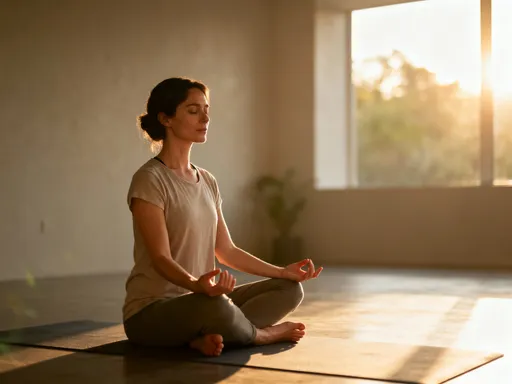
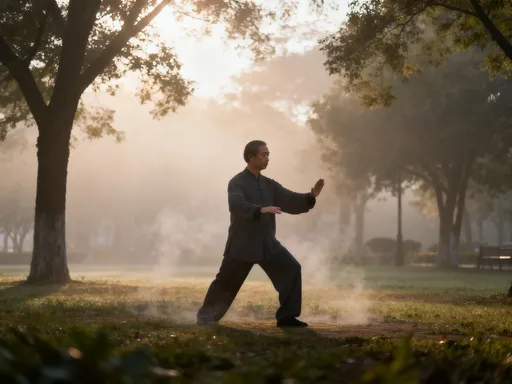
I began with just ten minutes a day, following a beginner-friendly online guide. The first session was awkward. I stood barefoot on a yoga mat, arms slightly raised, palms facing down. The instructor called this posture *Standing Like a Tree* (Zhan Zhuang), one of the most fundamental qigong practices. My legs trembled. My mind wandered to the laundry I hadn’t folded. I wondered if I looked silly. After five minutes, I felt restless and gave up. But I returned the next morning, determined to finish the full ten.
By day three, something subtle shifted. I still didn’t feel “enlightened,” but I noticed a slight lightness in my chest. My breathing had slowed without effort. That night, I fell asleep faster than usual—without scrolling through my phone or replaying the day’s frustrations. On day five, I tried a simple hand-raising sequence: palms rising slowly in front of the body, then lowering with the exhale. The movement was so minimal it felt almost pointless. Yet afterward, I realized I hadn’t thought about work for nearly twenty minutes—a rare mental break in my usual routine.
One evening, after a tense phone call with my sister, I practiced diaphragmatic breathing for five minutes: inhaling deeply through the nose, expanding the belly, and exhaling slowly through the mouth. I didn’t do any formal postures—just sat in a chair and focused on the breath. Within minutes, the tightness in my shoulders eased, and my emotional reaction softened. I didn’t forget the conflict, but I no longer felt consumed by it. These small moments of relief convinced me to keep going. I wasn’t looking for transformation; I was learning to find pockets of peace amid the chaos. And qigong was giving me the tools to do so.
The Core Psychological Techniques in Qigong Practice
As I continued, I began to recognize the three foundational techniques that make qigong effective for mental well-being: meditative movement, rhythmic breathing, and focused intention. Each plays a distinct role in calming the mind and regulating emotions. Together, they form a practical toolkit that can be adapted to any lifestyle, even for those with limited time or physical mobility.
Meditative movement refers to the slow, deliberate motions that characterize qigong. Unlike aerobic exercise, which distracts the mind with effort, qigong movements are designed to draw attention inward. For example, the “Lifting the Sky” exercise involves raising the arms overhead as if gently lifting a weight, then lowering them with control. This simple action requires coordination and focus, which interrupts the cycle of repetitive, anxious thoughts. Neurologically, this type of movement stimulates the prefrontal cortex—the area responsible for executive function and emotional regulation—while quieting the amygdala, which processes fear and threat. Over time, this helps reduce mental clutter and improves cognitive clarity.
Rhythmic breathing is perhaps the most powerful component. Qigong emphasizes diaphragmatic or abdominal breathing, where the belly expands on the inhale and contracts on the exhale. This contrasts with the shallow chest breathing common during stress. Deep, slow breaths send signals to the brain that the body is safe, triggering the release of calming neurotransmitters like GABA. Practicing this for even five minutes can lower heart rate and blood pressure. I found that pairing breath with movement—such as inhaling as my palms rose, exhaling as they lowered—created a natural rhythm that felt soothing, almost like a lullaby for the nervous system.
Focused intention is the mental aspect of qigong. It involves directing awareness to specific parts of the body or visualizing positive sensations. For instance, during *Standing Like a Tree*, I was guided to imagine roots growing from my feet into the earth, creating a sense of stability. Another practice involved visualizing warm, healing light flowing through my hands. While this may sound abstract, research in psychoneuroimmunology suggests that mental imagery can influence physiological states. By focusing on feelings of warmth, safety, or peace, we activate neural pathways associated with relaxation. This isn’t about positive thinking—it’s about training the mind to access calm on demand.
Building Consistency Without Pressure
One of the greatest challenges in any wellness practice is consistency. I’ve started and abandoned many routines—yoga, journaling, even daily walks—because I set unrealistic expectations. With qigong, I learned to let go of perfection. I didn’t need a special outfit, a quiet room, or thirty uninterrupted minutes. I could practice while waiting for the kettle to boil, standing in my kitchen in socks and a sweater. Some days, I only did three minutes of breathing. Other days, I forgot entirely. But I noticed that even these fragmented efforts made a difference.
The key was integration, not discipline. Instead of adding qigong as another task, I wove it into existing habits. In the morning, I began with two minutes of standing meditation while my coffee brewed. After work, I did a short sequence before changing out of my clothes—a kind of mental “shower” to release the day’s tension. On weekends, I practiced longer forms in the backyard, enjoying the fresh air and sunlight. I also used audio guides on my phone, which provided gentle verbal cues without requiring me to memorize movements. This low-pressure approach removed the guilt of “failing” and made the practice sustainable.
Experts in behavioral psychology emphasize that habit formation works best when new behaviors are small, specific, and tied to existing routines. Qigong fits this model perfectly. It doesn’t demand time or energy; it restores them. Over time, I stopped thinking of it as a chore and began to look forward to it—a quiet moment just for me. The psychological benefit wasn’t just in the practice itself, but in the message it sent: I am worth this small act of care. That shift in mindset—toward self-compassion and presence—became as valuable as the physical techniques.
Beyond the Mat: How Qigong Changed My Daily Mindset
After three months of regular practice, the changes extended far beyond my ten-minute sessions. I became more aware of my body’s signals—when my jaw was clenched, when my breath was shallow, when my thoughts were spiraling. This awareness allowed me to intervene early, often with a few conscious breaths or a brief grounding posture. I didn’t eliminate stress, but I developed a buffer between stimulus and reaction. Where I once snapped at my children after a long day, I now pause, breathe, and respond more calmly.
My relationships improved. I listened more attentively. I felt less need to control conversations or fix problems immediately. At work, I noticed better focus and fewer mental fog episodes. Colleagues commented that I seemed more composed, even during busy periods. The inner noise—the constant self-criticism and worry—had not disappeared, but it had quieted. It was like turning down the volume on a loud radio. I could still hear the static, but it no longer drowned out everything else.
Perhaps the most profound shift was in how I viewed myself. Qigong taught me that strength isn’t always loud or forceful. Sometimes, it’s in the stillness. It’s in the courage to stand quietly, to breathe through discomfort, to trust the process without demanding immediate results. This practice didn’t fix me—it helped me reconnect with myself. It reminded me that well-being isn’t about achieving perfection, but about returning, again and again, to a state of balance.
A Practice for Real Life
Looking back, my journey with qigong wasn’t about dramatic transformation. It was about small, consistent steps toward greater mental clarity and emotional resilience. I didn’t need to believe in energy fields or ancient wisdom to benefit from it. All I needed was willingness—to show up, to breathe, to move gently, and to pay attention. The science supports what I experienced: qigong is a practical, accessible tool for psychological well-being, backed by both tradition and research.
For women navigating the complexities of midlife—juggling roles, managing change, and seeking peace amid demands—qigong offers a sustainable path to inner calm. It doesn’t replace professional care for clinical conditions, but it complements it beautifully. And unlike many wellness trends, it asks for nothing more than presence. You don’t need special equipment, a lot of time, or prior experience. You only need a few minutes and an open mind.
If you’ve ever felt overwhelmed, distracted, or emotionally drained, consider giving qigong a try. Start with two minutes of standing and breathing. Notice how your body feels. Let go of judgment. There is no perfect way to do it—only your way. With time, you may find, as I did, that stillness is not empty. It is full of possibility. And in that quiet space, profound change can begin.