How I Finally Tamed Joint Pain Without Giving Up Movement
Joint pain used to slow me down—stairs hurt, mornings were stiff, and workouts felt risky. But after years of trial and error, I discovered a simple, science-backed exercise plan that actually works. No extreme routines or expensive gear. Just consistent, smart moves that protect joints while keeping me strong. If you’re tired of aching knees or creaky shoulders, this is for you. What changed wasn’t a miracle cure, but a shift in understanding: movement, when done right, isn’t the enemy of joint health—it’s the foundation. This is the journey from frustration to freedom, grounded in practical steps anyone can take.
The Hidden Cost of Ignoring Joint Health
For many women in their 30s, 40s, and beyond, joint discomfort begins subtly. It might start with a slight stiffness after gardening, a twinge in the knee when standing up from the couch, or a shoulder that doesn’t move as freely as it used to. These small signals are easy to dismiss—until they aren’t. The truth is, joint degeneration doesn’t only affect older adults. It can begin silently in midlife, accelerated by years of repetitive motions, poor posture, or lack of supportive muscle strength. Cartilage, the smooth cushion between bones, has no blood supply and relies on movement for nourishment. Without regular, gentle motion, it weakens over time, leading to increased friction and inflammation.
Inflammation is a key player in joint pain, often triggered by overuse or improper alignment during daily activities. Carrying heavy grocery bags with poor shoulder mechanics, sitting for long hours with hips flexed, or even standing in one place while cooking can place uneven stress on joints. Over time, this cumulative strain wears down protective tissues. The body responds with swelling and discomfort, especially in weight-bearing joints like knees and hips. Yet many people wait until pain becomes constant before seeking solutions. By then, the cycle of stiffness, weakness, and reduced mobility is already underway, making recovery more difficult.
What’s often misunderstood is that joint health is not just about age—it’s about use. A woman in her 35s who regularly lifts children, carries laundry baskets, or jogs on hard surfaces may experience joint wear just as much as someone decades older. The difference lies in early awareness and intervention. Recognizing the early signs—morning stiffness lasting more than 20 minutes, difficulty rising from a chair without pushing off with hands, or a clicking sensation in the knee—can make all the difference. These are not normal inconveniences to accept; they are invitations to adjust how we move and care for our bodies.
Ignoring joint signals doesn’t just lead to discomfort—it can limit independence. Simple pleasures like walking through a park, playing with grandchildren, or dancing at a family celebration become harder when joints protest every step. The emotional toll is real: frustration, loss of confidence, and a sense of aging faster than desired. But the good news is that joint degeneration is not inevitable. With the right approach, it’s possible to slow, even reverse, some of the damage. The key lies in understanding that joints thrive on movement, not rest, and that small, consistent actions can yield significant long-term benefits.
Why Movement Is Medicine (Not the Enemy)
For years, the instinctive response to joint pain has been to stop moving. Rest, ice, and avoidance become the default strategy. While short-term rest may help acute injuries, long-term immobilization does more harm than good. Joints are designed to move, and when they don’t, they begin to deteriorate. The synovial fluid that lubricates joints—often compared to motor oil in a car—circulates best when joints are in motion. Without regular movement, this fluid thickens, reducing lubrication and increasing friction between bones. This leads to stiffness, decreased range of motion, and a higher risk of cartilage breakdown.
Scientific studies consistently show that low-impact, controlled movement supports joint health. Research published in the journal Arthritis & Rheumatology found that individuals with mild to moderate osteoarthritis who engaged in regular, moderate exercise experienced less pain and better function than those who remained sedentary. The reason? Movement stimulates the production of synovial fluid and helps deliver nutrients to cartilage. It also strengthens the muscles around joints, which act as natural shock absorbers. When muscles are strong, they reduce the load placed directly on joints during daily activities like walking, climbing stairs, or lifting objects.
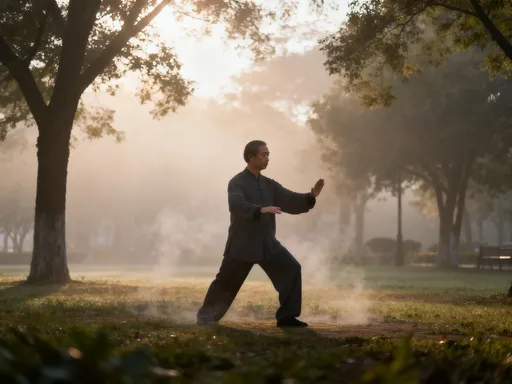
Another misconception is that exercise will ‘wear out’ joints like tires on a car. But the human body is not a machine with finite parts—it’s a dynamic system that adapts to use. Just as bones become denser with weight-bearing activity, joints become more resilient with appropriate movement. The key is choosing the right type of exercise: low-impact, controlled, and focused on form rather than intensity. Activities like walking, swimming, cycling, and tai chi have been shown to improve joint function without increasing damage. In fact, a long-term study from the Framingham Heart Study cohort found no evidence that moderate physical activity accelerates joint degeneration in healthy adults.
The risks of inactivity are far greater than the risks of movement. When joints are not used, surrounding muscles weaken, ligaments tighten, and mobility declines. This creates a vicious cycle: less movement leads to more stiffness, which leads to even less movement. Over time, this can result in joint instability, poor balance, and a higher risk of falls—especially concerning for women over 50, who face increased bone fragility due to hormonal changes. Movement, therefore, is not just beneficial—it’s essential. It keeps joints nourished, muscles strong, and the body capable of everyday tasks. The goal is not to push through pain, but to move wisely, consistently, and with awareness.
The Core Principles of Joint-Smart Exercise
Not all movement is created equal when it comes to joint health. The difference between helpful and harmful exercise lies in three foundational principles: control over speed, range over repetition, and balance over intensity. These principles form the backbone of a joint-friendly fitness approach. Control ensures that each movement is deliberate, reducing the risk of sudden stress on connective tissues. Rushing through exercises increases shear forces on joints, especially in the knees and shoulders. By slowing down, the body has time to engage the right muscles, maintain proper alignment, and protect vulnerable areas.
Range of motion is another critical factor. Many people focus on how many repetitions they can do, but for joint health, how far a joint moves is often more important. Maintaining full range of motion prevents stiffness and keeps connective tissues supple. For example, performing a squat with proper depth—hips below knees—engages more muscle fibers and promotes hip and knee mobility. However, this must be done with control and proper form. If depth compromises alignment, it’s better to reduce the range and build gradually. The goal is not to force a joint beyond its current capacity, but to gently expand its functional limits over time.
Balanced movement patterns are essential for joint protection. Many daily activities involve forward motions—reaching, lifting, bending—leading to muscular imbalances. The chest muscles tighten, the upper back weakens, and the shoulders roll forward, increasing strain on the rotator cuff. A balanced routine includes movements in all planes: forward and back, side to side, and rotational. This ensures that joints are supported equally from all directions. For instance, pairing a push-up with a row exercise strengthens both the front and back of the shoulders, creating stability and reducing injury risk.
Proper alignment is the silent guardian of joint health. When the body is aligned—knees over toes, spine neutral, shoulders relaxed—forces are distributed evenly across joints. Poor alignment, such as letting knees cave inward during a squat, concentrates stress on a small area, accelerating wear. Muscle support plays a crucial role here. Strong glutes, core, and quadriceps act like braces, stabilizing the hips, spine, and knees. Without this support, joints bear the full brunt of movement. Warm-ups and cooldowns are non-negotiable: they prepare the body for activity and aid recovery. Finally, listening to body signals is vital. Discomfort is normal when building strength, but sharp pain, swelling, or locking are red flags that demand attention.
My Daily 12-Minute Routine That Actually Helps
After years of experimenting, I settled on a simple 12-minute daily routine that requires no equipment and can be done at home. It’s designed to boost circulation, maintain joint mobility, and reduce morning stiffness. I do it first thing in the morning and again after long periods of sitting—two times when stiffness tends to peak. The routine takes just 12 minutes, but the benefits are profound. Within two weeks of consistent practice, I noticed my knees felt looser, my shoulders moved more freely, and my overall sense of ease improved.
The routine begins with ankle circles—10 clockwise and 10 counterclockwise per foot. This simple movement stimulates circulation in the lower legs and prepares the ankles for weight-bearing. Next are knee glides: lying on the back with knees bent, I gently slide one heel forward and back, keeping the foot on the floor. This mobilizes the knee joint and activates the quadriceps without strain. Hip openers follow—lying on my back, I bring one knee toward my chest, then gently guide it across the body for a gentle stretch. This releases tension in the hips, a common source of lower back and knee discomfort.
Shoulder rolls come next—10 forward and 10 backward—performed slowly to improve scapular mobility. I then add shoulder blade squeezes, pulling my shoulder blades together as if holding a pencil between them. This strengthens the upper back and counteracts the forward slump from daily sitting. Wrist mobility drills—gentle flexion, extension, and side-to-side motions—help maintain hand and forearm function, especially important for those who type or cook frequently. Finally, I finish with neck glides: slowly tilting my head side to side and forward and back, releasing tension built up from driving or screen use.
Each movement is done with control, focusing on smooth, fluid motion rather than speed. The entire sequence flows from bottom to top, mirroring the body’s natural alignment. Modifications are easy: if floor movements are uncomfortable, they can be done seated. The key is consistency, not perfection. Doing this routine daily—even on days when I don’t feel stiff—has made a lasting difference. It’s not about intense effort; it’s about regular care. Like brushing your teeth, it’s a small habit with long-term protective benefits. Over time, it’s helped me maintain flexibility, reduce aches, and feel more connected to my body.
The Weekly Strength & Stability Plan (3x a Week)
While daily mobility work keeps joints limber, strength training is what builds long-term resilience. I follow a joint-protective strength circuit three times a week, focusing on form, control, and muscle engagement. The exercises are bodyweight-based, making them accessible and safe. Each session lasts about 20 minutes and includes bodyweight squats, wall push-ups, step-ups, and bird-dogs. These movements build functional strength—muscle power that supports real-life activities—without putting excessive strain on joints.
Bodyweight squats are foundational. I perform them with feet shoulder-width apart, lowering slowly until my hips are just below my knees. The focus is on keeping my chest lifted, back straight, and knees tracking over my toes—never caving inward. This strengthens the glutes, quads, and hamstrings, all of which support the knees and hips. Wall push-ups replace floor push-ups to reduce wrist and shoulder strain. Standing at arm’s length from a wall, I perform controlled presses, engaging my core and keeping my elbows at a 45-degree angle. This builds upper body strength while protecting the rotator cuff.
Step-ups are another joint-friendly exercise. Using a low step or sturdy platform, I step up with one foot, bring the other foot up, then step down with control. This improves balance, strengthens the glutes, and enhances hip stability. I alternate leading legs to ensure even development. The bird-dog exercise is a core and stability favorite. On hands and knees, I extend one arm and the opposite leg, holding for a few seconds before switching. This improves coordination, engages the deep core muscles, and supports spinal health—all while minimizing joint load.
Form cues are essential: neutral spine, soft joint lock (never fully locking elbows or knees), and controlled tempo. I aim for 2–3 sets of 10–12 repetitions per exercise, focusing on quality over quantity. Progression is gradual: after several weeks, I added resistance bands to increase challenge without impact. I also increased hold times in static positions, like the squat hold, to build endurance. The goal is not to bulk up, but to build supportive muscle that protects joints during daily life. Over time, this routine has made stairs easier, standing for long periods less tiring, and workouts more enjoyable. Strength isn’t just about power—it’s about protection.
When to Back Off: Recognizing Pain vs. Discomfort
One of the most important lessons in joint care is learning to distinguish between discomfort and pain. Muscle fatigue, mild soreness, and a feeling of stretch are normal when starting a new routine. These signals indicate that muscles are adapting. But sharp, localized joint pain—especially if it lingers after exercise—is a warning sign. It means something is wrong, whether it’s poor form, overexertion, or an underlying issue that needs attention. Ignoring these signals can lead to injury and setbacks.
Red flags include swelling, joint locking, clicking with pain, or a persistent ache that worsens with activity. If any of these occur, it’s time to pause and reassess. Continuing to push through pain can damage cartilage, inflame tendons, or strain ligaments. Instead, I scale back—reduce range of motion, lower resistance, or switch to gentler movements. Sometimes, a few days of rest and gentle mobility work are enough to reset. Other times, consulting a physical therapist is the wisest choice. They can assess alignment, identify muscle imbalances, and provide personalized guidance.
It’s also important to recognize that consistency beats intensity. Small, daily efforts compound over time. Doing a 10-minute routine every day is more effective than a 60-minute session once a week. Joint health is a long-term investment, not a quick fix. There will be days when energy is low or stiffness is high. On those days, I modify—shorten the routine, focus on breathing, or simply walk. The goal is to stay connected to the practice, not to meet a rigid standard. Listening to the body isn’t weakness; it’s wisdom. It’s what allows sustainable progress without injury.
Long-Term Gains: How This Changed My Active Life
The cumulative effect of these small, consistent actions has been transformative. Stairs no longer feel like a challenge. Walking the dog, gardening, or playing with grandchildren happens without hesitation. Workouts are no longer something I fear but something I enjoy. The constant background hum of joint discomfort has faded, replaced by a sense of strength and ease. What started as a search for pain relief has become a lifelong commitment to movement and self-care.
Joint health is deeply connected to long-term independence. The ability to move freely—to get up from a chair, carry groceries, or dance at a wedding—is not something to take for granted. By investing in joint care now, even without current pain, women can preserve their mobility and quality of life for years to come. This isn’t about achieving peak performance; it’s about maintaining the simple joys of daily living. The routine I’ve shared isn’t a cure-all, but a sustainable practice rooted in science and real-life experience.
Starting early makes a difference. Even in your 30s, building supportive habits can prevent future problems. It’s never too late to begin, but the earlier you start, the more you gain. And while this approach has helped thousands, it’s not a substitute for professional medical advice. If you have existing joint conditions, chronic pain, or health concerns, always consult a healthcare provider or physical therapist before beginning any new exercise program. Movement is powerful, but it should always be guided by knowledge, respect, and care for your unique body.