How Hobbies Quiet Your Mind Without You Even Trying
You don’t need a meditation app or a therapist’s couch to feel calmer—sometimes, the real relief comes from simply doing something you love. I’m talking about hobbies. What used to feel like just a way to pass time actually reshapes your mental state in quiet, powerful ways. Science backs this: engaging in regular, enjoyable activities lowers stress hormones and boosts emotional resilience. This isn’t about productivity or mastery. It’s about giving your brain a break by doing nothing “useful”—and finding that it’s exactly what your mind needed.
The Hidden Crisis of Modern Mental Overload
In today’s fast-paced world, mental fatigue has become a silent companion for many. The average day is filled with decisions—what to eat, what to wear, how to respond to messages, which tasks to prioritize. Even seemingly small choices accumulate, creating a background hum of mental noise that never truly quiets. For women in their 30s to 55s, this burden is often amplified by the dual roles of managing careers and households. The result isn’t always a dramatic panic attack, but a steady erosion of emotional energy, leading to irritability, low motivation, and a sense of being emotionally flat.
This state of chronic mental overload doesn’t announce itself with alarms. Instead, it creeps in through missed moments of joy—laughing less, feeling less present with loved ones, or snapping at children over minor issues. The brain, constantly processing and reacting, becomes overtaxed. Neurologically, this sustained activation keeps stress hormones like cortisol elevated, which over time can disrupt sleep, weaken immunity, and impair emotional regulation. The body and mind are designed for rhythm, not constant output. Yet modern life often denies us the natural pauses we need to reset.
What’s often overlooked is that healing doesn’t always require a clinical intervention. While therapy and medication are vital for many, there’s another, quieter path to mental restoration: the simple act of doing something just because it brings pleasure. This is where hobbies step in—not as distractions, but as essential counterbalances to the demands of daily life. They offer a space where the mind isn’t solving problems, but simply being. And in that space, recovery begins.
Why Hobbies Work Where Other Fixes Fail
Many people turn to structured solutions for stress—mindfulness apps, fitness routines, or scheduled therapy sessions. These are valuable tools, but they often carry an implicit pressure to perform or improve. Hobbies, by contrast, operate on a different psychological principle: they are self-directed, non-judgmental, and driven by intrinsic enjoyment rather than external outcomes. This distinction is crucial. When an activity is done purely for the pleasure it brings, the brain enters a state of psychological safety, free from the pressure to achieve.
Neuroscience reveals why this matters. When someone engages in a hobby they love—whether it’s tending to plants, sketching, or playing a musical instrument—the brain often enters a state known as “flow.” In flow, attention becomes absorbed in the task, self-consciousness fades, and time seems to disappear. This state is linked to reduced activity in the amygdala, the brain’s fear and stress center, and increased activity in regions associated with focus and reward. Dopamine, a neurotransmitter linked to pleasure and motivation, is naturally released, creating a sense of calm satisfaction.
Unlike exercise, which can feel like another item on a to-do list, or meditation, which requires deliberate mental discipline, hobbies invite participation through curiosity and joy. They don’t demand perfection. A crooked knitting stitch or an off-key note doesn’t diminish the benefit—it may even enhance it by reinforcing the idea that mistakes are part of the process. This acceptance is therapeutic in itself. In a world that often measures worth by output, hobbies restore the forgotten truth that being is enough.
The Myth of “Productive” Self-Care
Self-care has become a cultural buzzword, but it’s often misunderstood. Many approach relaxation with the same efficiency mindset they apply to work. Reading a novel becomes a tool for self-improvement, yoga is practiced to lose weight, and journaling is expected to yield profound insights. While these activities have value, the pressure to make leisure “useful” undermines their true purpose: to offer the mind a rest from striving. When every moment must serve a goal, even downtime becomes another form of labor.
The irony is that the most restorative experiences are often the most purposeless. Humming while folding laundry, doodling on the edge of a grocery list, or watching clouds drift by—these small acts of unstructured play are not wasted time. They are moments when the brain shifts from problem-solving mode to a state of open awareness. In psychology, this is known as “soft fascination,” a gentle form of attention that allows the mind to wander without anxiety. Unlike forced focus, soft fascination restores mental energy without effort.
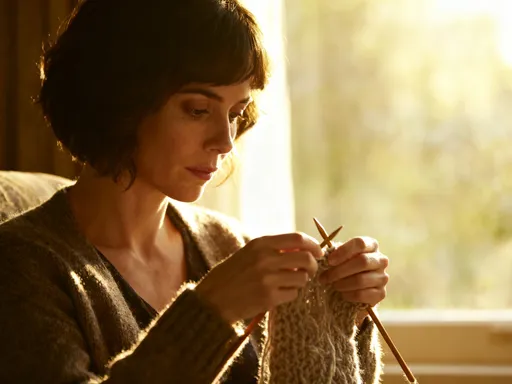
Letting go of productivity in leisure doesn’t mean abandoning responsibility. It means recognizing that emotional balance requires space for aimless engagement. A woman who knits without finishing a sweater, or gardens without concern for harvest, is not failing—she is practicing emotional self-preservation. These activities are not about the end product but the process: the rhythm of the needles, the feel of soil between fingers, the quiet concentration that pushes intrusive thoughts aside. In these moments, the mind isn’t idle—it’s healing.
How to Choose a Hobby That Actually Helps Your Mind
Not all hobbies are equally restorative, and the key lies in alignment with personal temperament. The goal is not to adopt the most popular or Instagram-worthy pastime, but to find an activity that feels natural and inviting. For some, creativity is soothing—painting, writing, or crafting allows emotions to flow without words. For others, repetitive motions provide comfort: knitting, quilting, or baking offer a meditative rhythm that calms the nervous system. Still, others thrive in nature-based hobbies like walking, birdwatching, or tending a garden, where the sensory richness of the outdoors gently grounds the mind.
The best hobbies are low-barrier and forgiving. They don’t require expensive equipment, formal training, or large blocks of time. A coloring book and colored pencils can be kept on the coffee table for moments of quiet. A ukulele can sit in the corner, ready for a few unplanned chords. Even cooking a simple meal with attention to flavors and textures can become a mindful practice. The emphasis should be on accessibility and consistency, not skill or achievement. Showing up matters more than mastering the craft.
For women juggling multiple responsibilities, the idea of adding another commitment can feel overwhelming. That’s why it’s essential to reframe hobby time as non-negotiable self-maintenance. Just as you wouldn’t skip brushing your teeth, you shouldn’t consistently sacrifice moments of joy. Start small: five minutes of sketching, ten minutes of listening to music while stretching, or a short walk with no destination. Over time, these fragments accumulate into a stronger, more resilient mental state. The right hobby doesn’t add to your load—it lightens it.
Real-Life Shifts: What Changes When You Prioritize Play
When hobbies become a regular part of life, the changes are often subtle but profound. Women who reintroduce play into their routines report feeling more emotionally balanced, even when external stressors remain unchanged. One woman shared that after starting watercolor painting on weekends, she noticed she was less reactive during family disagreements. “I used to get frustrated quickly when the kids left toys everywhere,” she said. “Now, I pause. I breathe. I don’t know if it’s the painting or just having that time for myself, but I feel like I have more space inside.”
Another described how daily gardening helped her sleep better. “I’m not growing anything fancy—just herbs and a few flowers. But being outside, touching the soil, watching things grow… it slows me down. I don’t bring my phone out there. It’s the one part of my day that’s truly mine. And somehow, I fall asleep easier.” These testimonials reflect a broader psychological truth: when the mind has a consistent outlet for joy, it becomes more flexible, more patient, and more resilient in the face of daily challenges.
These benefits are not merely anecdotal. Research in positive psychology supports the idea that engaging in enjoyable activities increases emotional regulation and reduces symptoms of anxiety and depression. The mechanism is simple: positive experiences build psychological resources. Each time a person engages in a hobby, they reinforce the neural pathways associated with calm and satisfaction. Over time, this creates a buffer against stress. The brain learns that not every moment must be tense or productive—that joy is a valid and necessary part of life.
Breaking the Guilt of “Wasting Time”
One of the biggest obstacles to adopting a hobby is guilt. Many women, especially those raised to prioritize others’ needs, struggle with the idea of spending time on themselves. Sitting down to knit or read a novel can trigger thoughts like, “I should be doing something useful,” or “This is selfish.” These beliefs are deeply ingrained, often stemming from cultural expectations that equate worth with productivity. But this mindset is not only outdated—it’s harmful to mental health.
Time spent on a hobby is not wasted. It is cognitive maintenance. Just as a car needs regular oil changes to run smoothly, the brain needs regular moments of unstructured engagement to function well. When you allow yourself to play, you are not neglecting responsibilities—you are equipping yourself to meet them with greater clarity and calm. Think of it as recharging a battery. A phone can’t operate on empty, and neither can a person. Rest is not the opposite of productivity; it is its foundation.
To overcome guilt, it helps to reframe hobby time as an act of self-respect. You are not indulging—you are restoring. Start by scheduling small, protected moments in your day. Even ten minutes can make a difference. Use gentle reminders: “This is my time to breathe,” or “I deserve moments of joy.” Over time, these moments become less like exceptions and more like a natural rhythm. And as the benefits become clear—better mood, more patience, deeper sleep—the guilt begins to fade, replaced by a quiet sense of permission.
Building a Life That Lets Joy In—Without Force
The most sustainable way to benefit from hobbies is to weave them into the fabric of daily life, not as grand gestures, but as small, consistent practices. This doesn’t require overhauling your schedule or buying new supplies. It means noticing opportunities for play in the ordinary. Stirring a pot of soup can become a moment of mindfulness if you focus on the aroma and texture. Folding laundry can be soothing if done slowly, with attention to the rhythm of the motions. The key is presence, not perfection.
Environmental cues can support this shift. Keep a sketchpad on the kitchen table. Leave your gardening gloves by the back door. Place a favorite book on your nightstand. These small signals make it easier to engage without effort. You’re not forcing yourself to “take time”—you’re simply making space for joy to appear. Over time, these micro-moments accumulate, creating a life that feels less frantic and more grounded.
In the end, hobbies are not luxuries. They are acts of psychological hygiene—quiet, essential practices that protect mental well-being. They remind us that we are more than our roles, more than our tasks, more than our responsibilities. We are also beings who need to create, explore, and enjoy. By honoring that need, we don’t just quiet our minds—we reclaim our humanity. And in that reclamation, we find not just relief, but renewal.