Worried about who’s watching your energy data? How I secured my smart home without losing convenience
You know that peace of mind when your home runs smoothly, saving energy while you sleep? I felt it too—until I realized my energy usage habits were being stored online, visible to anyone with access. It made me wonder: Who else could be seeing when I’m home, cooking, or relaxing? Like you, I wanted efficiency without sacrificing privacy. So I took a close look at how my devices track energy use—and what I found changed how I think about smart home security forever.
The Moment I Felt Exposed—Even in My Own Home
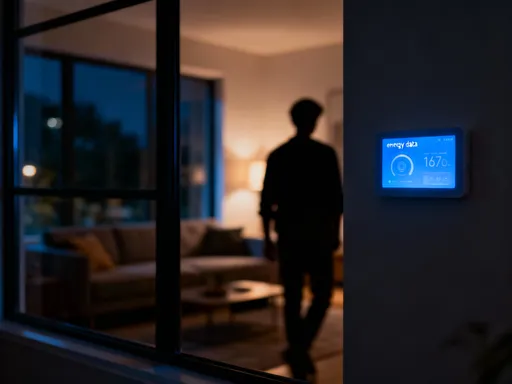
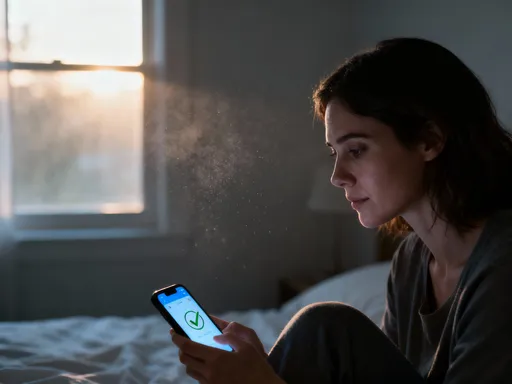
It was 2 a.m., and I couldn’t sleep. My mind kept circling back to a notification I’d seen earlier that day—a weekly energy report from my smart thermostat app. Out of curiosity, I opened it. There it was: a color-coded timeline showing exactly when each room warmed up, when the kitchen lights turned on, when the washer ran, even when the TV was on in the living room. It wasn’t just numbers. It was a story. Our story. And I hadn’t realized how much I was sharing.
I stared at the screen, my heart beating a little faster. The graph showed my daughter’s bedroom light coming on at 6:15 a.m., the coffee maker firing up at 6:30, the garage door opening at 7:45. It tracked our weekends too—longer heating cycles on Saturday mornings, a spike in the kitchen around dinner time, lights off by 10:30. I suddenly felt like someone was watching us, not through a window, but through our electricity.
I didn’t install these devices to be monitored. I did it to save money, to keep the house comfortable, to reduce our carbon footprint. But now, that same data could tell a stranger when we were home, when we were asleep, when we were away. And if I could see it, who else could? The utility company? The app developer? A third-party data broker? Maybe even someone with less good intentions? That night, I didn’t just feel tired—I felt exposed. And I knew I wasn’t alone. If you’re using smart devices, this could be your story too.
What Your Energy Monitor Really Knows (And Who Might Access It)
Let’s be honest—most of us don’t think twice about the data our smart devices collect. We see the benefits: lower bills, automated heating, remote control from our phones. But behind those conveniences is a constant stream of information about how we live. And energy monitors? They’re some of the most revealing tools in your home.
Think of it this way: your energy monitor doesn’t just measure how much power you use. It sees patterns. It knows when you wake up because your kettle turns on. It knows when you cook dinner because the oven spikes. It knows when you’re watching a movie because the living room lights dim and the TV draws steady power. Over time, it builds a detailed map of your daily rhythm. And that map? It’s not just useful for efficiency—it’s valuable to others.
Companies use this data to improve services, yes, but also to build user profiles. Some share or sell anonymized data to third parties for market research. The problem? “Anonymized” isn’t always as safe as it sounds. With enough data points, it’s surprisingly easy to re-identify a household. And once that happens, someone could know when you’re away on vacation—making your home a target. Or they could use your habits to craft convincing phishing messages. (“Hi, we noticed your refrigerator was running longer than usual—want a repair quote?” Sound familiar?)
Then there’s the risk of data breaches. No system is 100% secure. If a hacker gains access to a database of energy usage patterns, even without names or addresses, they can make educated guesses about lifestyle, income level, family size, and routines. And while no one’s suggesting someone’s spying on you right now, the possibility should give us all pause. This isn’t about fear—it’s about awareness. The more we understand what our devices know, the better we can protect ourselves.
Why “Secure by Default” Isn’t Always True
When I started digging into my devices’ settings, I assumed the companies had my back. After all, they promise security and privacy in their ads. But what I found was disappointing. Most of my devices were set to share data by default—no warning, no pop-up asking for permission. The privacy settings were buried deep in menus, labeled with confusing terms like “data optimization” or “service enhancement.” Opting out? That took effort.
I checked three different brands: my thermostat, my smart plug system, and my energy monitor. All three collected detailed usage logs. All three uploaded that data to the cloud automatically. And only one gave me a clear option to disable it—and even then, it was under “Advanced Settings,” not front and center. I called customer support for one brand, hoping for clarity. The rep was polite but didn’t really understand my concern. “It’s all encrypted,” she said. “And we don’t sell your data.” But she couldn’t tell me who did have access, or how long the data was stored.
That’s when I realized: “secure by default” often means “connected by default.” Companies prioritize features and analytics over user control. And we, as users, are left playing catch-up. We install a new device, get excited about the app, and skip the fine print. Later, we forget to go back and review permissions—especially when updates roll in constantly, each asking for “improved functionality” without explaining what that means for privacy.
This isn’t about blaming any one company. It’s about recognizing a pattern: convenience is easy; privacy takes work. But that work is worth doing. Just like we teach our kids to lock the bathroom door or not share passwords, we need to treat our smart home settings with the same care. The good news? You don’t need to be a tech expert to make meaningful changes. You just need to know where to look.
Small Changes, Big Protection: What I Did in One Weekend
I decided to take back control—one device at a time. I blocked out a Saturday morning, made myself a cup of tea, and sat down with my phone and laptop. My goal wasn’t to disconnect everything. I still loved the convenience of adjusting the temperature from bed or getting alerts when the dryer finished. But I wanted to keep that while reducing unnecessary exposure.
First, I turned off cloud storage for my energy monitor. Most devices let you store data locally on a hub or router instead of sending it to a remote server. It meant I couldn’t access real-time data from work, but I could still check weekly summaries when I was home. The trade-off? Worth it for the peace of mind.
Next, I renamed my devices. I’d originally labeled them things like “Baby Room,” “Mom’s Office,” and “Front Porch Camera.” Cute, but a goldmine for anyone who accessed the data. I changed them to neutral names: “Zone 1,” “Zone 2,” “Outdoor Sensor.” No personal clues, no family details—just functional labels.
Then I enabled two-factor authentication on all my smart home accounts. It takes an extra few seconds to log in, but it adds a strong layer of protection. I also reviewed app permissions and revoked access for third-party services I didn’t actively use—like the energy analytics app I’d tried once and forgotten about.
My husband walked in halfway through. “Are we overreacting?” he asked, half-joking. I showed him the timeline from that night—the one that showed our entire routine. He went quiet. “What if someone knows when we’re away?” he said. That was the moment it clicked for him too. We weren’t being paranoid. We were being responsible. By Sunday evening, we’d updated settings on every device, written down our new passwords, and agreed to check everything again in three months. It felt good—like we’d finally locked the digital doors.
Balancing Safety and Smarts—Without Giving Up Savings
One of my biggest worries was that securing my data would mean losing the benefits I loved. I didn’t want to go back to manual thermostats or guesswork on energy bills. But here’s what I learned: privacy and efficiency aren’t opposites. In fact, they can work together.
I kept the features that mattered—like automatic temperature adjustments and outage alerts—but changed how and when data was shared. Instead of constant cloud syncing, I set my devices to upload summaries once a week. That way, I still got insights into our usage trends, but without a live feed of our every move.
I also started using local processing more. Some newer devices can analyze energy patterns right on the hub, so you get smart recommendations—like “lower the heat by 2 degrees at night”—without sending raw data online. It’s like having a personal assistant who keeps your secrets.
And the savings? Still there. In fact, being more mindful about data made me more mindful about usage. I noticed we were running the dishwasher during peak hours, so I switched to late-night cycles. I saw how much energy the guest room used when we had visitors, so I adjusted the thermostat settings. The data was still useful—I just controlled how it flowed.
Think of it like home security. You don’t board up all the windows because you’re afraid of intruders. You lock the doors, install a camera, and set a routine. Smart tech is the same. You don’t have to reject it. You just have to use it wisely. A little caution doesn’t mean giving up comfort—it means enjoying it more, knowing you’re in charge.
Teaching My Family to Care—Without Scaring Them
Once I’d made changes for myself, I knew I had to bring my family on board. But how do you talk about data privacy with teenagers who just want to control their room’s lights from their phone? Or with parents who still think “the cloud” is something in the sky?
I started with simple comparisons. I told my teens, “It’s like not leaving your diary open on the kitchen table. Just because you can share something doesn’t mean you should.” I showed them how renaming devices protected our privacy. They thought it was kind of cool—like being part of a secret mission.
With my parents, I focused on control. “You wouldn’t give a stranger a key to your house,” I said. “This is like a digital key. We just want to make sure only the right people have access.” I helped them update their own settings, one step at a time. No pressure, just support.
The key was making it normal. We added “smart home check” to our seasonal routines—like changing air filters or cleaning gutters. Every three months, we’d review settings together. It became part of how we cared for our home. And over time, my kids started asking questions: “Should we turn off location sharing on this app?” “Do we really need this permission?” That shift—from passive users to mindful managers—was everything.
Privacy isn’t just a tech setting. It’s a family value. It’s about respect, safety, and trust. And when we treat it that way, it doesn’t feel like a chore. It feels like love.
Long-Term Peace of Mind: What’s Changed After Six Months
It’s been six months since that sleepless night. I still use my smart devices every day. I still get energy reports. But now, when I open the app, I don’t feel uneasy. I feel in control.
The changes I made have become habits. I review settings quarterly. I pause before installing new apps. I think about what data I’m sharing and why. It’s not perfect—technology keeps evolving, and so do the risks. But now I have a routine, a mindset, and a sense of ownership.
The biggest change isn’t in my devices. It’s in how I feel. That anxiety—the sense of being watched—has faded. In its place is something quieter but more powerful: confidence. I know our routines are ours. I know our home is not just smart, but secure. And when I tuck in my daughter at night, I don’t worry about who might be tracking her bedtime. I just enjoy the moment.
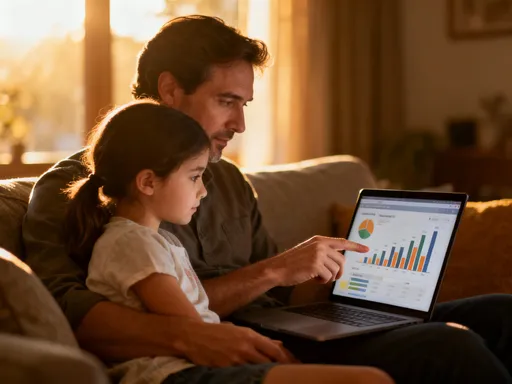
Recently, I was reviewing our monthly energy summary—local data, synced once a week. The graph showed our usual pattern: early mornings, quiet afternoons, a bump in the evening. It was just numbers again. But this time, they felt like ours. No hidden eyes. No invisible observers. Just a family living peacefully in a home that works for them, not against them.
That peace? It’s not just in the numbers. It’s in knowing we’ve made our life both efficient and truly ours.
Securing your energy data isn’t about paranoia—it’s about respect. Respect for your routines, your space, and your right to live quietly in your own home. What started as a worry became a lesson in mindful tech use: that the smartest homes aren’t the most connected, but the most thoughtfully protected. And that peace? It’s not just in the numbers—it’s in knowing you’ve made your life both efficient and truly yours.