What If Your Phone Could Turn Everyday Moments into Lasting Knowledge?
Have you ever seen something fascinating—a plant in the park, a quote in a book, a handwritten recipe from Mom—and wished you could remember it forever, without the hassle of typing or forgetting? What if your phone could quietly capture and organize those moments, turning fleeting observations into a personal library of wisdom? It’s not magic. It’s already in your pocket. Let’s explore how scanning tools can quietly transform the way you learn, grow, and remember.
The Moment That Sparks the Idea: When Memory Isn’t Enough
We’ve all been there—standing in front of a museum plaque, flipping through an old family notebook, or staring at a powerful quote on a café wall, thinking, I need to remember this. Maybe it was your aunt’s secret apple pie recipe scribbled on a napkin, or a line from a poem that made your heart pause. You snapped a photo, told yourself you’d come back to it, and now—weeks later—it’s buried somewhere in a sea of 2,000 unsorted photos. You can’t even remember which folder you might have saved it in, if you saved it at all.
It’s not your fault. Our phones are full of moments we meant to keep, but never quite did. Voice memos that start with “I’ll remember this later” and end in silence. Notes apps with half-finished lists. Screenshots of articles we promised ourselves we’d read. The intention is beautiful—we want to grow, to learn, to preserve the little things that matter. But the execution? It’s messy, overwhelming, and honestly, a little discouraging.
And the truth is, we don’t need to remember everything. But we do want to remember the things that speak to us—the ones that make us pause, smile, or think differently. The problem isn’t our memory. It’s the gap between the moment we feel inspired and the effort it takes to save it. That gap is where good intentions go to die. But what if that gap could shrink? What if saving a moment didn’t mean typing it out, labeling it, or filing it perfectly? What if it could be as easy as pointing your phone and tapping once?
This isn’t about becoming more productive for the sake of checking boxes. It’s about honoring the quiet moments that shape who we are. It’s about giving yourself permission to collect not just information, but meaning. And the good news? You already have the tool. You just might not know how to use it—yet.
Meet Your Phone’s Hidden Superpower: Scanning That Works Like Magic
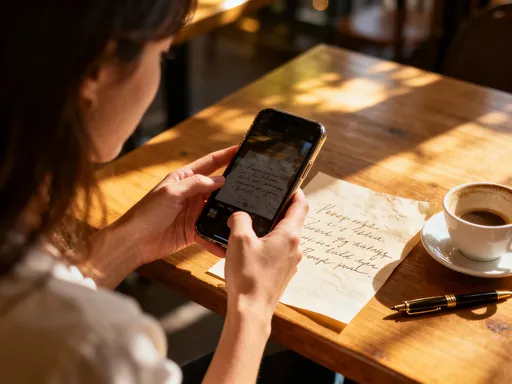
Let’s talk about the part of your phone you’re probably underestimating: the camera. Most of us think of it as a way to take pictures of birthdays, sunsets, or the occasional funny pet video. But what if I told you your camera can also read? Not just see, but understand. That it can look at a piece of paper, a whiteboard, or a label and turn what it sees into text you can edit, search, and save—without you typing a single word?
This isn’t science fiction. It’s called scanning recognition, and it’s built into almost every smartphone today. You don’t need a special device or a complicated app. On an iPhone, open the Notes app, tap the camera icon, and choose “Scan Documents.” On Android, you can use Google Lens—just open your camera, point it at text, and tap the Lens icon. In seconds, your phone turns a photo into clean, readable text. It works on printed words, typed notes, and even most handwriting.
Think of it like having a quiet assistant who’s always ready. You’re at your child’s school event, and they’ve written a sweet note on the back of their art project. Instead of trying to remember the exact words or rushing to type them, you just snap a photo. Your phone reads it, saves it, and now that note lives in your digital world—where you can find it anytime, even years from now.
The beauty of this tool is how simple it is. You don’t need to download anything extra. You don’t need to learn new skills. It’s not about being tech-savvy. It’s about using what you already have in a way that fits your life. And once you start using it, you’ll wonder how you ever lived without it. It’s not flashy. It doesn’t buzz or beep. But it’s powerful in the quietest, most meaningful way.
From Snap to Smart: How One Photo Becomes Organized Knowledge
Let me tell you about a moment that changed how I use my phone. Last spring, I was cleaning out my mom’s kitchen after a family visit. On the counter was her old to-do list—scribbled in pencil, half-erased, with things like “call dentist” and “buy tulip bulbs.” Nothing earth-shattering. But seeing her handwriting, the way she crossed out tasks, the little doodle in the corner—it felt important. I took a photo, thinking I’d keep it as a memory.
Later that night, I opened the photo in my Notes app and tapped “Scan.” Instantly, the messy paper turned into clean text. I could edit it, add dates, even turn it into a checklist. But more than that—I could search for it. A few months later, when I was planning my garden, I typed “tulip bulbs” into my notes, and there it was. Not just the words, but the context. The memory. The moment.
What happened behind the scenes is called optical character recognition, or OCR. But you don’t need to know that. All you need to know is that your phone can “read” writing almost like a person does. It looks at the shapes of letters, figures out what they are, and turns them into digital text. It’s not perfect—especially with very messy handwriting—but it’s surprisingly good. And the more you use it, the more you’ll learn what works best: good lighting, steady hands, a flat surface.
The real magic isn’t in the technology. It’s in what happens next. That scanned text isn’t trapped in a photo anymore. It’s alive. You can copy it, paste it, search for it, organize it. You can save it in a folder called “Family Recipes” or “Garden Ideas” or “Quotes That Made Me Pause.” You can even share it with your sister or your best friend with one tap. What used to be a fleeting moment—seen, appreciated, then lost—is now part of your personal knowledge base. And it took less than 30 seconds.
Building Your Personal Knowledge Garden, One Scan at a Time
Now, imagine doing this not once, but regularly. Not because you’re trying to be perfect, but because you care about the little things that shape your life. That’s how you start building what I like to call your “personal knowledge garden.” It’s not a rigid system or a complicated database. It’s a living, growing collection of ideas, memories, and inspirations—curated by you, for you.
Think of it like a garden. You don’t plant everything at once. You start with one seed. Maybe it’s your daughter’s drawing with “I love you, Mom” in wobbly letters. You scan it. Then it’s your dad’s grocery list with “milk, eggs, and that cereal the kids like.” You scan that too. Then it’s a quote from a book that helped you through a hard week: “Courage doesn’t always roar.” You save that one just because it matters.
Over time, your garden grows. You begin to see patterns. You notice what inspires you, what comforts you, what makes you smile. You start looking for these moments, not just reacting to them. You become more present, more aware. And when you need encouragement, you don’t have to search the internet. You can just open your notes and read something that was made for you, by people you love, in moments that were real.
This isn’t about hoarding information. It’s about creating a space where your personal wisdom can grow. It’s where practicality meets emotion—where a recipe isn’t just instructions, but a connection to your grandmother’s kitchen. Where a child’s drawing isn’t just art, but a snapshot of a moment you’ll never get back. Your phone becomes more than a device. It becomes a keeper of meaning.
Making It a Habit: Small Steps That Stick
I know what you’re thinking. “This sounds great, but I don’t have time.” I’ve said that too. The truth is, you don’t need a lot of time. You just need a little consistency. And the best way to build a habit isn’t to aim for perfection—it’s to start small, in moments that already exist.
For example, try linking scanning to something you already do every day. After lunch, when you’re clearing the table, notice if there’s a note, a label, or a recipe worth saving. Snap it. While you’re waiting to pick up the kids from school, see that quote on the library wall? Scan it. With your morning coffee, flipping through a magazine and see a tip about organizing closets? Capture it before you put the magazine down.
Here’s a simple rule I follow: “See something worth keeping? Snap, scan, save—before you walk away.” That’s it. No pressure to organize it perfectly. No need to label it right away. Just get it into your phone. You can sort it later, or not at all. The important thing is that it’s saved.
And if you’re worried about taking too many photos, remember: you’re not just taking pictures. You’re turning them into something useful. A photo of a product label becomes a shopping list. A photo of a workout chart becomes your home gym guide. A photo of a handwritten note becomes a memory you can revisit anytime. The effort is tiny. The payoff? Huge.
And if you miss a day? That’s okay. This isn’t about being flawless. It’s about being kind to your future self. Every scan is a gift you’re giving to the person you’ll be next month, next year—someone who might need that recipe, that quote, that reminder of how far they’ve come.
Beyond Text: Capturing Ideas in Any Form
So far, we’ve talked mostly about words. But your knowledge garden can include so much more. Scanning isn’t just for text. It’s for any moment that teaches you something or makes you feel something.
Think about a diagram your child brought home from science class—how the water cycle works, drawn in bright crayons. You can scan that too. The image stays, and if there’s text, it becomes searchable. Or that sketch on a café napkin—a rough plan for a family vacation, with cities and dates scribbled in pen. Scan it, and now it’s part of your trip planning folder.
What about a menu from that little Italian restaurant you loved on your last trip? Scan it. Not because you’ll cook everything on it, but because it holds the memory of that evening—the laughter, the wine, the way your daughter tried anchovies for the first time. Now, when you want to recreate the feeling, you don’t have to rely on memory. You have the menu. You can even search for “bruschetta” and find it instantly.
Or picture this: you’re at a workshop or community class, and the instructor draws a chart on a whiteboard—steps to reduce stress, tips for better sleep, a diagram of healthy eating. Instead of scribbling notes, you take a photo and scan it. Now you have a clear, readable version you can refer to anytime. No more squinting at blurry photos or trying to decode your handwriting.
The point is, your world is full of learnable moments. A plant tag at the garden center. A label on a skincare product with ingredients you want to remember. A flyer for a local event that inspires you. All of these can become part of your personal knowledge system. You’re not just collecting data. You’re curating a life that’s easier to live, richer to remember, and more meaningful to grow through.
The Quiet Reward: How This Changes How You Think and Feel
Let’s be honest—most tech promises to save time or boost productivity. But this? This is different. The real reward isn’t just that you’ll find things faster. It’s that you’ll start to think differently. You’ll become more curious. More intentional. More connected to your own growth.
When you know that meaningful moments can be saved with a single tap, you start to notice them more. You become a collector of wisdom, not just a passerby. You begin to see life as something you can learn from, not just move through. And that changes how you feel. You feel more in control. More thoughtful. More at peace with the idea that you don’t have to remember everything—because you don’t need to. You’ve got a system that helps you keep what matters.
There’s also a quiet emotional comfort in knowing that the things you love are safe. That your mom’s handwriting isn’t lost in a drawer. That your child’s first poem isn’t buried in a backpack. That the quote that got you through a tough day is just a search away. You’re not just organizing information. You’re honoring your story.
And over time, something beautiful happens. You start to see yourself differently. Not as someone who forgets, who loses things, who means well but never follows through. But as someone who pays attention. Who values growth. Who builds a life rich with meaning, one small moment at a time. You’re not just using technology. You’re using it to become a wiser, more connected version of yourself.
So the next time you see something that makes you pause—a recipe, a quote, a child’s drawing—don’t just admire it and walk away. Let your phone help you keep it. Not because you have to, but because you can. Because you deserve to remember the things that matter. And because the most powerful technology isn’t the one that does the most. It’s the one that helps you live, love, and grow—just a little bit better, every single day.