Mapped 365 Days of Home Life: How My Robot Vacuum Changed What I Remember
You know that quiet moment when you pause in the hallway and suddenly feel a wave of nostalgia? I didn’t think my robot vacuum could bring me back to those. But after a year of letting it quietly roll through my home, capturing subtle routines—my daughter’s crayon drawings left on the floor, the way sunlight hits the kitchen every morning—I realized it wasn’t just cleaning. It was preserving. Not with videos or photos, but through patterns, timing, and traces. This is how smart cleaning became my unexpected memory keeper.
The Day I Noticed Something Was Different
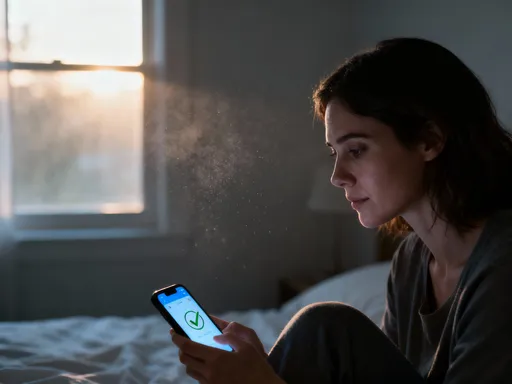
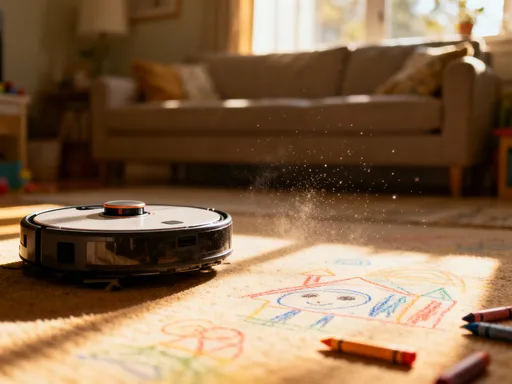
It started with a pause. A tiny, almost imperceptible hesitation in the middle of the living room, right near the kids’ playmat. My robot vacuum, which usually zips through like a determined little beetle, stopped. Not because it was stuck—though, let’s be honest, we’ve all been there, crouched on the floor, fishing out a tangled shoelace. No, this was different. It wasn’t stuck. It was… observing. That’s when the notification popped up on my phone: “Unusual debris pattern detected.” I frowned. Unusual? I walked over, expecting to find a cracker explosion or maybe a rogue piece of glitter glue. Instead, there was a small cluster of crayon shavings and a half-finished drawing of a purple cat with three eyes. My daughter had been there for hours that afternoon, completely absorbed, surrounded by her art. I hadn’t even noticed how long she’d stayed in one spot. But the vacuum had.
Curious, I opened the app and pulled up the cleaning log. There it was—a heat map of the room, glowing in soft oranges and reds where movement and debris were highest. That corner, where she’d been drawing, was the brightest patch of the day. And as I scrolled through the timeline, something unexpected happened: I started to see my own life unfold. The path the vacuum took each morning traced my coffee ritual—straight from the bedroom, through the hallway, into the kitchen, pause by the counter, then slow drift to the table. I saw where the dog napped every afternoon, a consistent blue blob on the cool tile under the dining table. And I saw my own late-night wanderings—those quiet 2 a.m. trips to the kitchen, not for food, just for water, or sometimes just to stand there, thinking. I’d never realized how often I did that. The vacuum wasn’t just cleaning the floor. It was mapping the rhythm of our days. And suddenly, I felt seen—not by a person, but by a machine that had quietly, faithfully, been paying attention.
From Dust to Data: How Cleaning Tracks Daily Rhythms
Here’s the thing most people don’t realize about smart vacuums: they’re not just sucking up dust. They’re gathering stories. Every time your robot rolls through the house, it’s using sensors, mapping algorithms, and navigation patterns to build a quiet, invisible record of how your home lives. It doesn’t take pictures. It doesn’t record sound. But it knows where people spend time, when rooms come alive, and how habits shift over weeks and months. Think of it like a silent witness—always present, never intrusive.
Take holidays, for example. Last Thanksgiving, the vacuum’s map showed something I hadn’t noticed: the living room stayed active long after dinner. The path lines were denser, looping back over the same spots, showing where people lingered—talking, laughing, kids chasing each other in socked feet. The vacuum had to pass through that area three extra times because of all the crumbs, but more than that, it captured the energy of the night. Even small changes become visible. When my son started kindergarten, his toy zone shifted from the living room rug to his bedroom floor. The vacuum’s weekly reports showed the activity moving, like a slow migration. And when I started working from home, the office corner lit up with new intensity—longer cleaning runs, more frequent visits. It wasn’t just tracking dirt. It was tracking life.
And sometimes, it tracks the harder things too. There was a week last winter when my mother wasn’t feeling well. She stayed with us for a few days, mostly resting in the guest room. The vacuum’s map showed a quiet, steady pattern there—short, slow passes, as if the room itself had slowed down. It wasn’t dramatic. But seeing that stillness in the data, week after week, made me realize how much a space can reflect a mood. These aren’t analytics meant for advertisers or social media. They’re personal. They’re intimate. They’re the kind of quiet records we used to keep in journals or photo albums—except now, they’re written in motion, in the path of a little machine that just wants to keep the floors clean.
The Emotional Weight of a Floor Plan
Some memories don’t come with captions. They don’t have perfect lighting or posed smiles. They’re the in-between moments—the ones we don’t think to photograph but feel deeply when they’re gone. That’s where my vacuum stepped in, without ever trying. I remember the week my father visited last spring. He’d sit every afternoon in my sunlit armchair, a book in his hands, a cup of tea on the side table. I didn’t think much of it at the time. It was just Dad being Dad. But after he left, I found myself opening the vacuum’s app, scrolling through the logs from that week. There it was: a consistent cluster of activity in that corner of the living room, every day between 2 and 4 p.m. The pattern was unmistakable. And for some reason, seeing it there—recorded, repeated, real—made me cry.
It wasn’t the chair. It wasn’t the sunlight. It was the repetition. The proof that he’d been there, that he’d settled in, that he’d made that spot his own, even for a short time. I’d have given anything for a video of him reading, but I didn’t have one. What I had was a heat map. And somehow, that was enough. These digital echoes don’t replace traditional memories. They don’t compete with photo albums or home videos. Instead, they complement them. They capture the quiet rituals: the way your teenager always drops their backpack by the door, the spot where the cat stretches out every morning, the path you take when you can’t sleep. Over time, these fragments form a soft, invisible archive—a map of belonging. And when someone’s no longer there, that map becomes a kind of comfort. Not because it’s flashy or detailed, but because it’s honest. It shows not what we wanted to remember, but what we actually lived.
How to Turn Cleaning Cycles into Memory Triggers
You don’t have to become a data detective to benefit from this. I didn’t start analyzing my vacuum logs to uncover family secrets. But once I realized what they could show, I began to look at them differently. Now, I treat the weekly summary like a kind of diary. Instead of just checking if the vacuum finished its run, I look at where it slowed down, where it changed direction, where it spent extra time. And I ask myself: what happened there?
Some weeks, it’s easy. A dense patch in the dining room? That was pizza night, with the kids eating off paper plates on the floor. A long, looping path through the kitchen late at night? That was when I was baking cookies at 11 p.m., stress-baking my way through a tough week. I started adding notes to the app—simple tags like “Game Night,” “Sick Day,” or “First Day of School.” Over time, these little markers turned the data into a story. I could scroll back to last March and see the week my daughter learned to ride her bike—activity shifted from the living room to the driveway, then back again, with grass clippings scattered across the entryway map. It was messy. It was real. It was life.
If your vacuum app allows it, try this: pick one week and review the cleaning paths day by day. Match them to your own memories. You might be surprised what comes up. Did you host a last-minute dinner? The kitchen will show longer, more frequent runs. Did someone stay over? The guest room will light up. These aren’t just cleaning stats—they’re emotional landmarks. And the more you connect them to your own experience, the more meaningful they become. You don’t need to save every log. Just the ones that feel important. Think of it as digital scrapbooking, but quieter, gentler, and already happening whether you notice it or not.
Privacy Without Sacrifice: Keeping It Human
I know what you’re thinking. Isn’t this just another way for technology to watch us? Isn’t it creepy, having a machine track where we walk, when we rest, how we live? I felt that too, at first. I deleted my logs twice before I got comfortable. But here’s what helped me: this isn’t surveillance. It’s observation—passive, abstract, and anonymous. Unlike cameras or voice assistants, smart vacuums don’t record faces, voices, or conversations. They don’t know who you are. They only know where movement happens and where dirt collects. Their memory is like a dancer’s muscle memory—patterns of motion, not identity.
I’ve taken simple steps to keep it that way. I turned off cloud sharing. I set the app to auto-delete logs after three months. I only save the ones that feel meaningful—like the week my father visited, or the month my daughter learned to walk. The rest? Gone. Not because I’m hiding anything, but because I don’t want to live in a museum of every single day. I want to remember what matters. And that’s the difference: this isn’t about hoarding data. It’s about choosing what to keep. It’s about using technology not to capture everything, but to help us notice the things we might otherwise miss. The goal isn’t to live under constant review. It’s to use a quiet tool to reflect on a life well lived—without the pressure of perfection.
When Technology Holds What We Forget
Last month, my son came to me with a question I didn’t expect. “Mom,” he said, “did Grandpa really sit in that chair every day when he was here?” I paused. I could have said yes. I could have told him a story. But instead, I pulled out my phone. I opened the vacuum app, found the logs from that week, and zoomed in on the living room. There it was—the daily cluster of activity, right in front of the window, every afternoon at the same time. I showed him the pattern. He stared at it for a long moment, then smiled. “He liked the light,” he said softly. And just like that, a memory was confirmed—not by a photo, not by a story, but by a map of motion.
In that moment, the vacuum wasn’t a gadget. It wasn’t a chore-saver or a tech toy. It was a keeper of truth. Machines don’t feel. They don’t grieve. They don’t miss people. But they can hold the shape of presence. They can show us where someone sat, how long they stayed, how they moved through a space. And sometimes, that’s all we need to feel close again. We don’t have to remember every detail. We just need a hint, a trace, a whisper of the past. And now, I realize, my vacuum gives me that—not on purpose, not dramatically, but gently, day after day, as it goes about its quiet work.
Living Lightly, Remembering Deeply
We spend so much time trying to capture our lives. We take photos. We post stories. We save videos. We want to hold on. But sometimes, the most meaningful records are the ones we don’t force. The ones that happen quietly, without fanfare, while we’re busy living. My robot vacuum doesn’t care about likes or shares. It doesn’t judge my messy floors or my late-night snacks. It just moves through the house, doing its job, and in the process, it collects the quiet poetry of ordinary days.
I used to think memory had to be intentional. That I had to set up the camera, press record, save the file. But now I see it differently. Memory can be accidental. It can be built in the path of a machine that only knows how to clean. It can live in the shape of a heat map, in the timing of a cleaning cycle, in the way a room lights up when someone you love spends time there. And maybe that’s the most beautiful part—this isn’t about perfection. It’s about presence. It’s about the fact that even on the days I feel like I’m failing, even on the days when the house is a mess and I’m running on coffee and willpower, life is still happening. And someone—or something—is noticing.
So now, when I hear that soft hum start up in the next room, I don’t just think, “Oh good, the floors will be clean.” I think, “There it goes again. Keeping track. Holding space. Remembering for me.” And I let it roll—not just to tidy up the dust, but to hold onto the moments that matter, one quiet pass at a time.